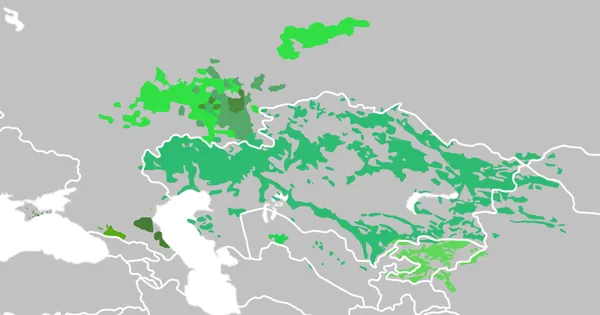
A study of Kipchak clans and tribes
Translated title; original title: Kıpçak uruk ve boyları üzerine bir inceleme
A master’s thesis examining the emergence of the Kipchaks from within the Kimek union, their westward advance with the migration of the Kay and Kun, their loose political structure, and their clans and tribes as traced in Arabic and Russian sources.
- Thesis
- Master's thesis, Ege Üniversitesi, Sosyal Bilimler Enstitüsü · Supervisor: Ali Osman Karatay
- Year
- 2017
- Added by
- Emre Emir
- On this site
- · 1 min read · 4 reads

This text is a translation of the Turkish original. Read the Turkish original
Abstract
The abstract is shown in the original language of the publication.
Kipchaks have emerged politically at the west side of Kimek Khaganate in IXth century. They are known as one the seven tribes that constitute Kimeks. Over time, they have become prominent among Kimek unity and have reigned in the area that lengthen from Irtysh to Urals. The political and ethnic structure of Eurasia steppe zone have changed with the effect of migration of tribes that have been triggered Kay and Kun of far east in the first half of XIth century. Kipchaks have gained strength with the attendance of Kay and Kuns and proceeded towards west and finally emerged in the South Russia and Lower Tuna in the second half of XIth century. Hereafter, they have been mentioned as Cuman in the west sources. Kipchaks haven't been able to organised in state structure they have organised more of a weak political structure that consist of the combination of tribes which have been taken under control. This political structure has reigned in a wide region. Kipchaks also have taken a part as mercenary Hungarian and Serbian, Byzantine, Georgian Kingdom. They also have moved to the areas as Bulgaria, Egypt and India and composed of management staff and some crucial parts of the army. Kipchaks political structure hase been ruined by Mongol invasion in the XIIIth century and they have been forced to immigrate to various countries but they haven't disappeared completely. In this period Arabian and Russian sources give some very important information about Kipchak clans and tribes that have been seen in various parts of the world. Some tribes of the Kipchaks are still seen as small ethnic units in the tribe-clan structure of the contemporary Turkish peoples.
Editorial note
The thesis traces the tribal and clan structure of the Kipchaks from their origins to the period after the Mongol invasion. The Kipchaks are introduced as one of the seven tribes that made up the Kimeks, appearing on the historical stage to the west of the Kimek Khaganate in the 9th century.
- It states that after the collapse of the Khaganate in the first quarter of the 11th century the Kipchaks dominated the area from the Irtysh to the Urals.
- The migration set off by the Kay and Kun peoples from the Far East changed the ethnic and political structure of the steppe; strengthened by these elements, the Kipchaks reached southern Russia and the Lower Danube.
- It emphasises that from then on they were referred to in Western sources by the name "Cuman".
- It finds that the Kipchaks did not form a state structure but rather a loose political union made up of tribes and clans, and that they served as mercenaries in Hungarian, Serbian, Byzantine and Georgian polities.
- Drawing on information from Arabic and Russian sources, it shows that some Kipchak tribes survive even today as small ethnic units among contemporary Turkic peoples.
This master’s thesis can be read as a preliminary study for the same author’s 2023 doctoral thesis on Oghuz–Kipchak ethnogenesis.
Citation and access
- Thesis type: Master’s
- Institution: Ege Üniversitesi, Sosyal Bilimler Enstitüsü
- Supervisor: Ali Osman Karatay
- Original record: hdl.handle.net
- Full text (PDF): on the publisher’s website
- Licence: info:eu-repo/semantics/openAccess (open access)
This page presents the citation details of the work, the author’s own abstract and our editorial board’s editorial note. For the full text, please consult the original record above; when quoting, cite the original publication.
Mentioned in this publication
Cite this publication
Özel, H. (2017). A study of Kipchak clans and tribes [Yüksek Lisans, Ege Üniversitesi, Sosyal Bilimler Enstitüsü]. https://kipcaktarihi.com/en/yazi/a-study-of-kipchak-clans-and-tribes
Özel, Haşim. “A study of Kipchak clans and tribes.” Kıpçaklar, 2017. https://kipcaktarihi.com/en/yazi/a-study-of-kipchak-clans-and-tribes.
Özel, Haşim. “A study of Kipchak clans and tribes.” Kıpçaklar, 2017, https://kipcaktarihi.com/en/yazi/a-study-of-kipchak-clans-and-tribes.
Contribute to this publication
Have you spotted an error, or do you have information or a source to add? Send an update suggestion based on your own knowledge and sources. No account is needed; suggestions are reviewed by the author and the editorial board.
Want to edit the text directly? Log in with your account and edit in the panel or create a free account. Your changes are reviewed side by side; if accepted, your name will appear among the contributors.