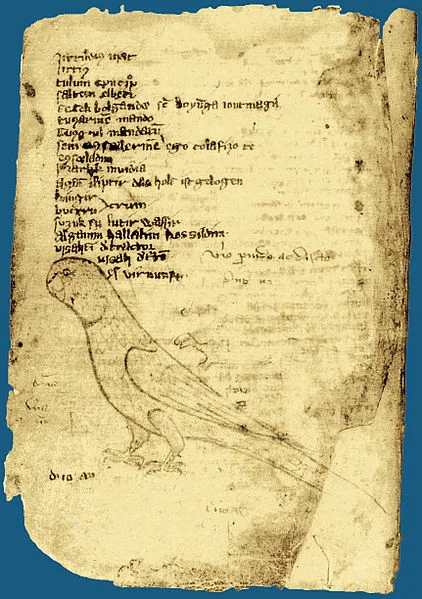
An Evaluation of the Word “Tovulga” in the Codex Cumanicus in the Context of Material Culture History
Translated title; original title: Codex Cumanicus’taki “Tovulga” Sözcüğünün Maddî Kültür Tarihi Bağlamında Değerlendirilmesi
Bringing archaeology to bear on the word tovulga, which the Codex Cumanicus glosses simply as “helmet”, Çoban defines the shape and features of the tovulga on the basis of Cuman-Kipchak helmets recovered from the Chungul, Tagancha and Tabarovka kurgans.
- Journal
- Genel Türk Tarihi Araştırmaları Dergisi (GTTAD), vol. 7, no. 14, pp. 401-414
- Year
- 2025
- Added by
- Emre Emir
- On this site
- · 1 min read · 1 read
Publisher: Genel Türk Tarihi Araştırmaları Dergisi (GTTAD) · Licence: CC BY-NC-ND 4.0 · Original record: dergipark.org.tr/tr/pub/gttad/article/1650242

This text is a translation of the Turkish original. Read the Turkish original
Abstract
The abstract is shown in the original language of the publication.
Military cultural history studies of Turkic peoples are emerging as a subfield within the scope of Turkic historical research. In this context, recent archaeological studies and research on historical texts have made significant contributions to military cultural history studies. However, it is observed that researchers who focus on written sources struggle to define past military terms in detail and often settle for general explanations and equivalents without providing the specific characteristics of the relevant elements. Undoubtedly, this situation is a natural consequence of the absence of illustrations related to these terms in written sources. Our study proposes the use of archaeological findings to address this issue and aims to provide a detailed definition of the term “tovulga” found in the Codex Cumanicus. The Codex Cumanicus is an exceptionally important source, not only as a multilingual work but also as a compilation of the vocabulary related to the material and spiritual culture of the Cuman-Kipchak communities, known for their military prowess, in the 14th century. In this work, terms related to various aspects of the Cuman-Kipchaks’ daily life, including military equipment, belief systems, and names of plants and animals, can be found. However, as is the case with many sources from that period, the Codex Cumanicus also lacks any illustrations or detailed descriptions of the material culture elements mentioned. In this context, our article aims to explain the physical characteristics, distinctive features, and design differences of the Cuman-Kipchak tovulga (helmet) by evaluating helmets obtained from the Chungul Kurgan, Tagancha Kurgan, and Kurgan No. 5 in Tabarovka, which are dated to the period when the Codex Cumanicus was written and are associated with the Cuman-Kipchaks.
Editorial note
Recep Efe Çoban draws attention to the fact that military terms in written sources are often explained only with general equivalents, the main reason being the absence of drawings or detailed descriptions in the texts. To close this gap, the author proposes combining archaeological finds with lexical data and chooses as an example the word “tovulga” (helmet) in the Codex Cumanicus.
- The Codex Cumanicus contains a rich vocabulary from the material and spiritual culture of the 14th-century Cuman-Kipchaks, such as military equipment, beliefs, and the names of plants and animals; however, it provides no visual information about them.
- Three find sites dated to the period in which the Codex was written and associated with the Cuman-Kipchaks were chosen as comparative material: the Chungul Kurgan, the Tagancha Kurgan and Kurgan No. 5 at Tabarovka.
- By examining the helmets recovered from these kurgans, the study seeks to explain the physical characteristics, distinctive elements and design differences of the Cuman-Kipchak tovulga.
- The article offers an example of an interdisciplinary method that combines language history with military cultural history and archaeology.
Citation and access
- Published in: Genel Türk Tarihi Araştırmaları Dergisi (GTTAD), 7(14), pp. 401–414 (2025)
- DOI: 10.53718/gttad.1650242
- Original record: dergipark.org.tr
- Full text (PDF): on the publisher's website
- Licence: CC BY-NC-ND 4.0
This page presents the citation details of the study, the author's own abstract and our editorial board's note. For the full text, please consult the original record above; when quoting, cite the original publication.
Mentioned in this publication
Cite this publication
Çoban, R. E. (2025). An Evaluation of the Word “Tovulga” in the Codex Cumanicus in the Context of Material Culture History. Genel Türk Tarihi Araştırmaları Dergisi (GTTAD), 7(14), 401-414. https://doi.org/10.53718/gttad.1650242
Çoban, Recep Efe. “An Evaluation of the Word “Tovulga” in the Codex Cumanicus in the Context of Material Culture History.” Genel Türk Tarihi Araştırmaları Dergisi (GTTAD) 7, sy. 14 (2025): 401-414. https://doi.org/10.53718/gttad.1650242.
Çoban, Recep Efe. “An Evaluation of the Word “Tovulga” in the Codex Cumanicus in the Context of Material Culture History.” Genel Türk Tarihi Araştırmaları Dergisi (GTTAD), 2025, https://doi.org/10.53718/gttad.1650242.
Contribute to this publication
Have you spotted an error, or do you have information or a source to add? Send an update suggestion based on your own knowledge and sources. No account is needed; suggestions are reviewed by the author and the editorial board.
Want to edit the text directly? Log in with your account and edit in the panel or create a free account. Your changes are reviewed side by side; if accepted, your name will appear among the contributors.