Kipchak Traces in Rize
Translated title; original title: Rize'de Kıpçak İzleri
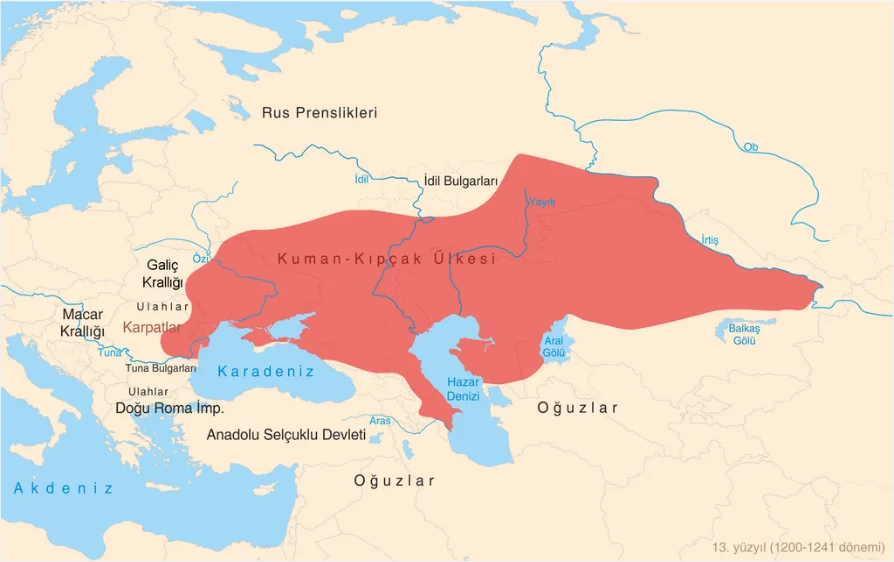
A master’s thesis that, after summarising the political history and the culture and civilisation of the Cuman-Kipchaks, searches for Kipchak traces in the region through a monograph on the village of Tunca (Dutha) in Rize.
- Thesis
- Master's thesis, Ondokuz Mayıs Üniversitesi, Sosyal Bilimler Enstitüsü, Tarih Anabilim Dalı · Supervisor: İbrahim Tellioğlu
- Year
- 2015
- Added by
- Emre Emir
- On this site
- · 1 min read · 2 reads
This text is a translation of the Turkish original. Read the Turkish original
Abstract
The abstract is shown in the original language of the publication.
Cuman-Qipchaqs, named differently by different nationalities since their anthropological features became the leader of steppenomadic Turkic tribe of the last migration wave towards the north of Blacksea from the inner part of Turkistan. Having trading, military and economical relationships with the other neighbour nationalities, Cuman-Qipchaqs provided to be memorialized in sources as 'Desht-i Qipchaq' by giving the area their own names during two-hundred-years prevail. Cuman-Qipchaq sevoking their existance in the East Europe madegreat contributions to the continuity of Blacksea as Turkish homeland because of their martialand quickly-organized features. This study named 'The Relics Qipchaq' in Rize is comprised of three main sections. Whereas the information about the political history of Cuman-Qipchaqs and the area the spreaded is given in section one, we talked about Cuman-Qipchaqs' culture and civilization in sectio ntwo. Insection three, it is endevaoured toin vestigate therelic of Cuman-Qipchaqs throught hemonographic structure of Tunca (Dutha) village by revealing the meaning of the name Rize, socio-economic and political history. In the period and in the place of investigation, the sources, books, article sand translated materials were embrassed objectively. In our study, the name of Cuman-Qipchaqs is sometimes used as Qipchaq, sometimes Cuman and sometimes Cuman-Qipchaqs. There lics of Cuman-Qipchaqs were found in the monographic structure of the village mentioned above as being suitable forthe title of ourstudy.
Editorial note
The thesis combines the general history of the Cuman-Kipchaks with a local case study. The Cuman-Kipchaks are defined as a nomadic steppe tribe that led the last great wave of migration from Turkestan towards the north of the Black Sea.
- The first section recounts the political history of the Kipchaks and the areas over which they spread.
- The second section deals with the culture and civilisation of the Kipchaks.
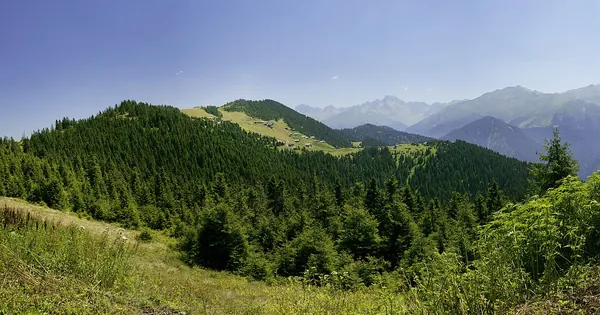
- In the third section the meaning of the name Rize and the socio-economic and political history of the province are presented, and Kipchak traces are sought on the basis of a monograph on the village of Tunca (Dutha).
- It emphasises that the Kipchaks gave their name to the steppes they dominated for about 200 years and contributed to the continuation of the north of the Black Sea as a Turkic homeland.
- In conclusion, it reports that Kipchak traces were found in the village monograph.
The thesis stands apart from other studies by combining general information on Kipchak history with local research at the scale of a single village. The author also notes that the names Cuman, Kipchak and Cuman-Kipchak are at times used interchangeably in the study. The record states that the thesis consists of IX, 103 leaves.
Citation and access
- Thesis type: Master’s
- Institution: Ondokuz Mayıs Üniversitesi, Sosyal Bilimler Enstitüsü, Tarih Anabilim Dalı
- Supervisor: İbrahim Tellioğlu
- YÖK thesis no.: 425462
- Original record: hdl.handle.net
- Full text (PDF): on the publisher’s website
- Licence: info:eu-repo/semantics/openAccess (open access)
This page presents the citation details of the work, the author’s own abstract and our editorial board’s editorial note. For the full text, please consult the original record above; when quoting, cite the original publication.
Mentioned in this publication
Cite this publication
Ayçiçek, A. (2015). Kipchak Traces in Rize [Yüksek Lisans, Ondokuz Mayıs Üniversitesi, Sosyal Bilimler Enstitüsü, Tarih Anabilim Dalı]. https://kipcaktarihi.com/en/yazi/kipchak-traces-in-rize
Ayçiçek, Ayşe. “Kipchak Traces in Rize.” Kıpçaklar, 2015. https://kipcaktarihi.com/en/yazi/kipchak-traces-in-rize.
Ayçiçek, Ayşe. “Kipchak Traces in Rize.” Kıpçaklar, 2015, https://kipcaktarihi.com/en/yazi/kipchak-traces-in-rize.
Contribute to this publication
Have you spotted an error, or do you have information or a source to add? Send an update suggestion based on your own knowledge and sources. No account is needed; suggestions are reviewed by the author and the editorial board.
Want to edit the text directly? Log in with your account and edit in the panel or create a free account. Your changes are reviewed side by side; if accepted, your name will appear among the contributors.