A Brief History of the Kipchaks
- Book
- The Kipchak Turks — Emre Emir, 2019
- Year
- 2019
- On this site
- · 8 min read · 6 reads
This text is a translation of the Turkish original. Read the Turkish original
The Kipchaks were known by different names in the historical records. They were recorded as Kipchak or Kivchak in Arabic, Cuman in Byzantine sources, Polovtsy in Russian, Kun in Hungarian, Valwen in German, Pallidi in Latin sources and Kharteash in Armenian sources.1 Georgian sources trace the presence of the Kipchaks in the Caucasus back to the fourth century BC. Among the records is the statement that in the time of Alexander two Turkic peoples called the Bunturki and the Kipchak lived along the Kura river.2 Likewise Pliny, one of the authors of antiquity, mentions communities called the Kamak and the Oran, which represent two important tribes of the Kipchaks.3 According to the historical records, the first occurrence of the word Kipchak is the phrase “türük kıbçak elig yıl olurmış” in the Shine Usu inscription, which is thought to have been part of the tomb of El Etmish Bilge Khagan (747-759).4 Western societies depicted the Kipchaks as blond-haired and blue-eyed. But this description does not cover all Kipchaks. Indeed, Kipchaks with chestnut hair, brown eyes and so on are also found.
According to Turkic mythology, the Kipchaks were an adopted son of Oghuz Khan. According to the Oghuz Khan Epic, when Kipchak's father died in a battle, Oghuz Khan adopted Kipchak, saying, “His father died in our service. He has no one to care for him. Let him be my son,” and raised him. When Kipchak grew up, Oghuz Khan gave him the government of the northern regions. Kipchak ruled there for 300 years, and so these regions were filled with the Kipchak Turks descended from Kipchak.5
The existence of the Kipchaks is known within the first millennium AD. From the eleventh century onward, however, thanks to their relations with the powerful states of the period that possessed a written tradition, we have detailed information about the Kipchaks. The records of antiquity carry the Kipchak trail even further back: Ögel and Aygil state that the Sabirs north of the Black Sea were connected with the Kipchaks and that the Kipchaks maintained their presence in the Caucasus from the first century onward.6
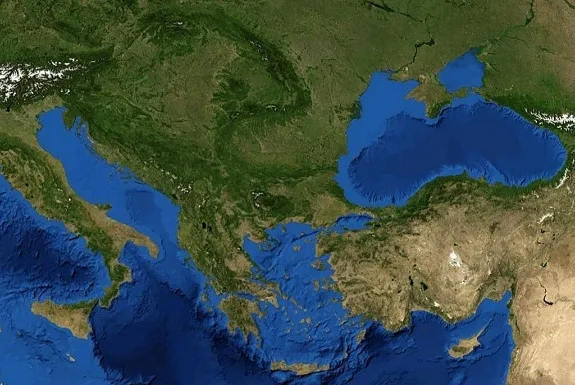
The Kipchaks' turn from Central Asia towards the West came about with the rise of the Khitan state. The Khitans (a people of Mongol origin who lived in the region from Manchuria in the north of China to Central Asia), who made their presence felt in northern China in 916 and caused other Turkic tribes to move as well, also caused the Kipchaks to turn rapidly westward. Yet it was not only the Khitans: because of the shortage of land and pasture, the Kipchaks moved west across the Idil (Itil) river. Within about a century, from the beginning of the eleventh century, the Caucasus and the area north of the Black Sea began to fill with Kipchaks, and from the 1060s, following the Pechenegs and the Uzes, they advanced as far as Eastern Europe.
From this time on, the name Kipchak came to be heard everywhere.7 Like the Pechenegs and the Uzes, the Kipchaks did not found a state on the steppes (the Balkans); rather, they lived as communities united on ethnic lines. Politically, the Kipchaks, who changed many balances, were a terrifying nightmare for their enemies, while for their friends they were protectors.
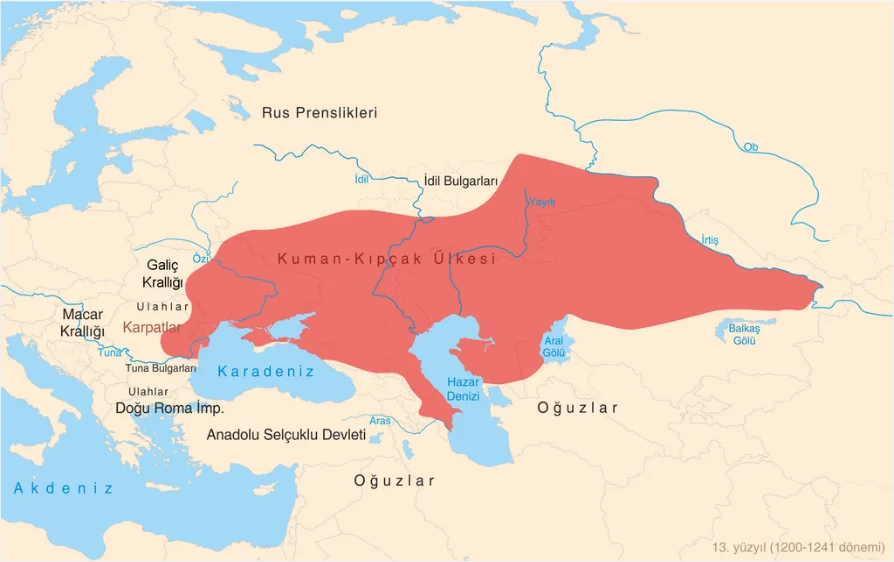
Over time the Kipchaks took control of the whole south of present-day Russia and Ukraine and founded a nomadic state in these lands. The lands over which this state founded by the Kipchaks in the region held sway were called the Dasht-i Kipchak, and the name Dasht-i Kipchak (Kipchak Steppe) remained in use until the eighteenth century. After the Mongols ended Kipchak dominance in the thirteenth century, the region took the name of the Golden Horde state. But, as I noted above, the name Dasht-i Kipchak also continued to be used.8 Indeed, the great majority of the Golden Horde state was made up of Kipchak Turks. Only in the upper strata were there Mongols. But they too became Turkicised within a short time.9 As a result of the Kipchaks' active role in the Golden Horde state and their Turkicisation of it, the Golden Horde came to be regarded as a Turkic state and has taken its place in the list of the 16 great Turkic states.
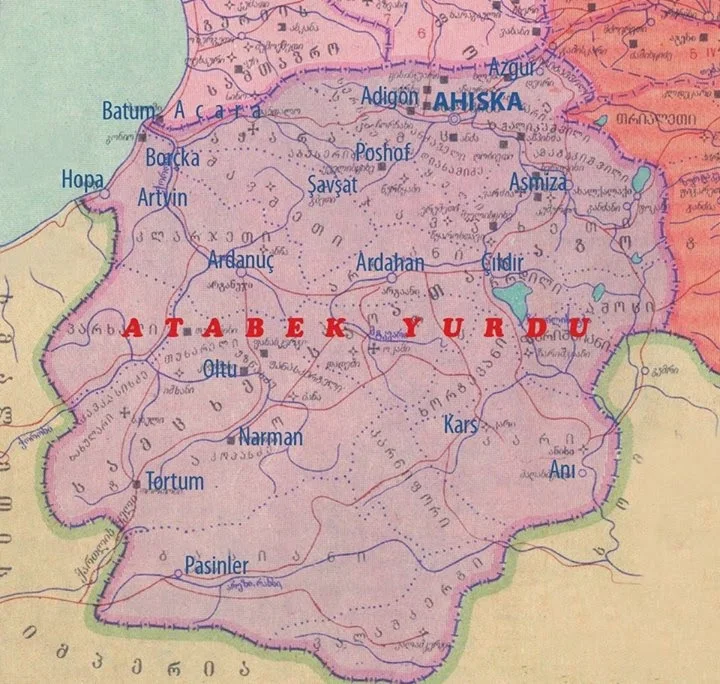
The Kipchaks, who played an active role on the Dasht-i Kipchak steppe, also played an active role in Eastern Anatolia, changing the balance there. Because the Georgian king David IV had no army with which to fight the Seljuks and the Iranians, he invited the Kipchak Turks to his country (1118-1120). In 1124, 45,000 Kipchak Turks coming from east of the Sea of Azov and north of the Caucasus defeated the Oghuz in the Çoruh valley and the İspir region and settled in these areas. When King David died in 1125, his successor Demetrius settled the Kipchaks, who had rebelled over problems of land, in the Ardahan, Oltu, Göle, Tortum, Şavşat, Ardanuç and Yusufeli areas.10 In 1267 the Kipchak Turks founded an autonomous Kipchak Turkic state attached to the Georgian state. The last chief (başbuğ) of the Atabeg state, Atabekli Mustafa, abandoned Christianity in 1578, accepted Islam and agreed to the Atabeg state joining the Ottomans.11 The Kipchaks who came to this region through the Georgians played the second most important role, after the Oghuz, in the Turkicisation of the Eastern Black Sea.12
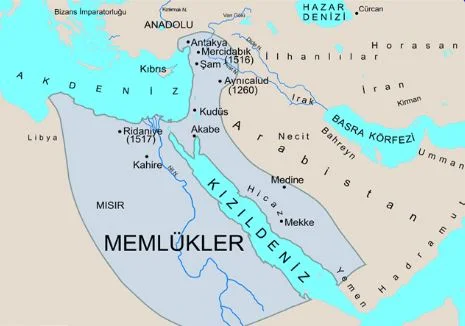
The Kipchaks played an important role not only in the Dasht-i Kipchak and Anatolia but also in Egypt and Syria, and became the masters of those regions. In Egypt, where they had gone as slaves, the Kipchaks rose over time and formed an elite military class in the Ayyubid period. Later, on 31 July 1250, Izz al-Din Aybak of the Bahri Mamluks became sultan by marrying Shajar al-Durr (the wife of the former Ayyubid sultan of Syria and Egypt) and officially founded the Mamluk (Slave) state. Later Aybak, the sultan of the Mamluk state, wished to make political marriages with the daughters of the Ayyubids of Hama and Mosul, but was killed by his wife Shajar al-Durr (10 March 1257). After Aybak, his young son Nur al-Din Ali succeeded him, and Qutuz, of the Kipchak Turks, was appointed as his regent. Later Qutuz, saying that in the face of the Mongol danger there had to be a strong sultan on the throne, ascended the throne on 11 November 1259. While these events were taking place in Egypt, the Mongols under Hülegü seized Baghdad, Aleppo, Homs, Damascus, Hama and the other important cities of Syria. Hülegü, having won success after success, called on Qutuz to submit, but Qutuz killed the four Mongol envoys who had come to him and set out for Syria.13 The Mamluk army faced the Mongol army commanded by Kitbuqa Noyan on the meadow of Ayn Jalut (3 September 1260). The battle, which began in the morning, ended by evening in the absolute victory of the Mamluks and marked the beginning of the end of the Mongols.14 With this victory the Mamluks became the greatest state of the Islamic world and retained this position until the rise of the Ottomans.15
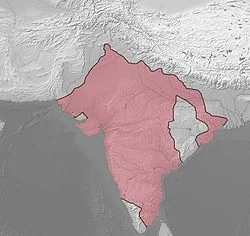
We also see the Kipchak Turks under the name of the state covering part of the territories of present-day Afghanistan, Bangladesh, Pakistan and India. The Delhi Sultanate was founded by the Mamluk (Slave) dynasty of Kipchak Turkic origin. In this state, founded in Delhi by Qutb al-Din Aybak, four Turkic dynasties ruled one after another: the Mu'izzis, the Khaljis, the Tughluqs and the Sayyids.16 One of the finest examples showing that the Kipchaks were not merely a warrior tribe and that they valued art, learning and literature is the Delhi Sultanate. The sultans of Delhi, who took many scholars, poets, writers and artists under their patronage, rendered great service to the development of culture and art.17 Although the Turks have been called barbarians throughout history, the Kipchaks, the Oghuz and the Karluks alike have shown that the Turks were not a barbarian people and that they placed great importance on learning, art, literature and culture. Throughout history the Turks founded great civilisations and taught the world lessons in many fields. Indeed, in the sixth century BC, when many nations regarded women as witches and slaves, the Turks placed a woman at the head of their state (Tomyris).18
Since the beginning of the Common Era, the Kipchak Turks have made a name for themselves by playing important roles on the stage of history in different geographies. Indeed, among the Turks their warlike qualities came to the fore and they came to be known as the most warlike Turkic tribe. Remembered with honour up to our own day (the twenty-first century), the Kipchaks continue to be remembered with honour today. In the twenty-first century, Kazakhstan, Kyrgyzstan and Hungary are three independent Turkic states descended from the Kipchaks. Since I am sure that our readers reading these lines are now asking, “Are the Hungarians Kipchaks?”, I would like to answer your question with a short explanation. At a recent meeting bringing together the Turkic countries, the Hungarian Prime Minister Viktor Orbán said: “We are a Christian Turkic land and we stand firm on Kipchak-Turkic principles.” As we can understand from this sentence, Hungarian Prime Minister Viktor Orbán openly stated that their ancestors were Kipchak Turks and that they stand on Kipchak principles. Today a Turan Kurultai is held regularly every year in Hungary, where they celebrate by keeping their traditions alive.
“Our interpretation is that the Hungarians accept that they are Kipchak Turks. Prime Minister Orbán’s words and the Turan Kurultai held every year show this clearly.”
Footnotes
- Mehmet Çoğ, “ORTA ÇAĞ’DA KAFKASYA HAVZAS-INDA KIPÇAKLAR” Karadeniz İncelemeleri Dergisi, 2015; (19): p.58 ↩
- Plinius, Hıstorıa Naturalis, VI/I; M. F. Brosset, Gürcistan Tarihi, Trans. Hrant Andreasyan, Ed. Erdoğan Merçil, Ankara 2003, p. 16. ↩
- Fahreddin Kırzıoğu, Kıpçaklar, TTK, Ankara 1992, p.32. ↩
- Necmettin Hacıeminoğlu, TDV İslam Ansiklopedisi, Kıpçak Türkçesi, c.25, p.421. ↩
- Bahaeddin Ögel, “OGUZ KAGAN DESTANI” https://web.archive.org/web/20210122194652/http://www.elibrary.az/docs/jurnal/jrn2015_484.pdf, pp.13-23. ↩
- Bahattin Ögel, Türk Kültürünün Gelişme Çağları, İstanbul 2001, p. 227; Yakup Aygil, Hristiyan Türklerin Kısa Tarihi, İstanbul 1995, p. 25. ↩
- Mehmet Çoğ, “ORTA ÇAĞ’DA KAFKASYA HAVZAS-INDA KIPÇAKLAR” Karadeniz İncelemeleri Dergisi, 2015; (19): pp.59-60 ↩
- Wikipedia, “Deşt,i Kıpçak”, https://tr.wikipedia.org/wiki/Deşt-i_Kıpçak (Accessed: 5 Temmuz 2019) ↩
- Fuat Bozkurt, Türklerin Dili, T.C Kültür Bakanlığı Yayınları, Kültür Eserleri Dizisi 252, p.276. ↩
- Mehmet Özmenli, Atatürk Üniversitesi Sosyal Bilimler Enstitüsü Dergisi 2016 20 (2): p.526. ↩
- Akdes Nimet Kurat, “Türk Kavimleri ve Türk Devletleri” pp.83,84 ↩
- Mehmet Özmenli, Atatürk Üniversitesi Sosyal Bilimler Enstitüsü Dergisi 2016 20 (2): p.526. ↩
- A. Onur Çalışır, “Kölelikten, Sultanlığa; Memluk Devleti Tarihi” https://www.tarihikadim.com/kolelikten-sultanliga-memluk-devleti-tarihi/, (Accessed: 6 Temmuz 2019) ↩
- Charles Phillips, “Ayn-ı Calud Savaşı” https://www.britannica.com/event/Battle-of-Ayn-Jalut, (Accessed: 6 Temmuz 2019) ↩
- İsmail Yiğit, “Memlukler” TDV İslam Ansiklopedisi, 2004, Ankara, c.29, p.90 ↩
- Wikipedia, “Delhi Sultanlığı”, https://tr.wikipedia.org/wiki/Delhi_Sultanlığı, (Accessed: 6 Temmuz 2019) ↩
- Naımur Rahman Farooql, “Delhi Sultanlığı”, TDV İslam Ansiklopedisi, 1994, İstanbul, c.9, pp.130-132. ↩
- Hatice İslamoğlu, “Türklerin İlk Kadın Hükümdarı: Tomris Hatun ve İskitler” http://www.antiktarih.com/2018/11/11/tomris-hatun-ve-iskitler/ (Accessed: 7 Temmuz 2019) ↩
Mentioned in this publication
Cite this publication
Emir, E. (2019). A Brief History of the Kipchaks. The Kipchak Turks. Kıpçaklar. https://kipcaktarihi.com/en/yazi/brief-history-of-the-kipchaks
Emir, Emre. “A Brief History of the Kipchaks.” The Kipchak Turks içinde. Kıpçaklar, 2019. https://kipcaktarihi.com/en/yazi/brief-history-of-the-kipchaks.
Emir, Emre. “A Brief History of the Kipchaks.” Kıpçaklar, 2019, https://kipcaktarihi.com/en/yazi/brief-history-of-the-kipchaks.
Contribute to this publication
Have you spotted an error, or do you have information or a source to add? Send an update suggestion based on your own knowledge and sources. No account is needed; suggestions are reviewed by the author and the editorial board.
Want to edit the text directly? Log in with your account and edit in the panel or create a free account. Your changes are reviewed side by side; if accepted, your name will appear among the contributors.