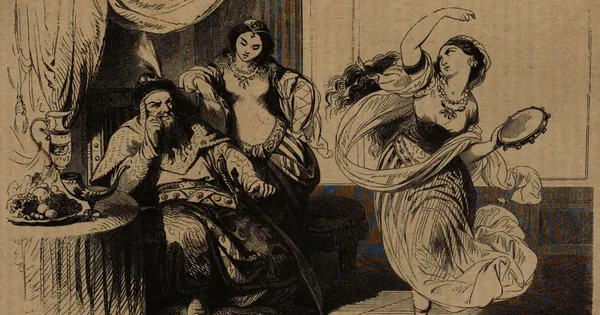
Mamluk Kipchak and Armeno-Kipchak
- Book
- The Kipchak Turks — Emre Emir, 2019
- Year
- 2019
- On this site
- · 9 min read · 5 reads
This text is a translation of the Turkish original. Read the Turkish original
Mamluk Kipchak
Mamluk Kipchak is also called Kipchak Turkic in Arabic script or Egyptian-Syrian Kipchak. It is a dead Turkic language belonging to Old Kipchak, used in the Mamluk state in Egypt and Syria from the mid-thirteenth century to the end of the fifteenth century. The great majority of the works in Old Kipchak Turkic were written in the Mamluk period. Some of the Kipchak Turks living on the Dasht-i Kipchak steppe passed into Egypt as a result of migrations under Mongol pressure and of being sold as slaves, and, overthrowing the Ayyubid state, founded the Mamluk (Slave) state.1 Although in Arabic sources its name frequently appears as “al-Dawla al-Turkiyya”, that is, the Turkish State, in the literature it has remained known as the Mamluk state.2
Mamluk Kipchak holds a special place in the history of the Turkic language. Turkic, which was not given much importance as the language of the ruling class in the Ghaznavid and Seljuk states, received the value it deserved in the Mamluk state.3 In the Mamluk period the Arabs felt the need to learn Turkic because of political circumstances.4 For in the Mamluk state most of the ruling class spoke Turkic, while most of the population spoke Arabic. For this reason various Turkic works were written to make it easier for the Arabic-speaking population to learn Turkic.
The language of the Kipchak works written in the Mamluk state is studied in three groups: Mamluk Kipchak, Oghuz Turkic, and a mixed Oghuz-Kipchak language.5
Some of the works written in Mamluk Kipchak that have survived to the present day:
- Lexicographical and Grammatical Works
Kitâbü'l-İdrâk li Lisâni'l-Etrâk (The Book of Understanding the Language of the Turks)
The work, written by Abu Hayyan al-Andalusi with the aim of teaching Turkic to Arabs, was completed in Cairo in 1312. It consists of a grammar and dictionary sections arranged in alphabetical order. The book, of which there are two manuscript copies, one in the Beyazıt State Library and the other in the Istanbul University library, both in Istanbul, was published by Mustafa Bey of Salonica (Istanbul 1895) and by Ahmet Caferoğlu (Istanbul 1931).6
Kitâbü Bulgati'lmüştâk fi 1ugati't-Türk ve'l-Kıfçak
The author of this work, written before 1451, is Abu Muhammad Jamal al-Din Abdullah al-Turki, of Turkic origin. According to Zajączkowski, the work was written in Syria. It is an Arabic-Turkic book. The work, the only copy of which is in the Bibliothèque Nationale in Paris, was published by Ananiasz Zajączkowski in two volumes, one on nouns and the other on verbs.7
Kitâbü't-Tuhfeti'z-Zekiyye fi'llugati't-Türkiyye
This anonymous work, whose introduction states that it was written in Kipchak Turkic, was composed in Egypt before 1425. Its only manuscript is in the Beyazıt State Library. A facsimile of the book was produced by Tibor Halasi-Kun (Budapest 1942), and its edition was prepared by Besim Atalay (Istanbul 1945).8
- Works of Jurisprudence (Fiqh)
Kitâbü 'l-Fıkh
This is an interlinear translation of an Arabic book of jurisprudence. There is no information about the translator or the date of translation of the work, whose only manuscript is in the Süleymaniye Library. It appears that the book is a second translation of the commentary entitled Mukaddimetü'1-Gaznevi fi'libâdât.9
Şerhü'l-Menâr
The work, translated from Arabic into Turkic and commented on by Mukabil b. Abdullah, was written in Egypt in 1402. Various copies of the book are found in the Bursa Library of Old Manuscripts and Printed Works and in the Süleymaniye and Nuruosmaniye libraries.10
Kitâb fi'1-Fıkh bi-1isâni't-Türki
It appears that this work, whose author is unknown, was written before 1421. Its only copy is registered in the Millet Library.
- Works on Archery and Horsemanship
Münyetü'l-Guzât
It is one of the rare works of Mamluk Turkic on military matters. Its title means “What the warriors of the faith desire”. In terms of its linguistic features and the art of war, it is one of the oldest written sources in Turkic. It is also a very important work from the point of view of cultural history. The only known copy of the work is in the Topkapı Palace Library, in the Ahmed III section, under number 3468.11
Although the translator states that he arranged his work in six sections (“fen”), the copy we have lacks one of these six sections, the one on “holding the shield”. In addition, the section on “shooting arrows” has no heading. This indicates that this section, too, is incomplete.12
The translator lists the sections of the work as follows:
- Riding a horse
- Holding the spear
- Using the sword
- Using the shield
- Shooting arrows
- Firing the cannon
Kitâbü'l-Hayl
It is one of the oldest works written in Turkic on horsemanship and veterinary medicine. There are two manuscript copies of the work, one in Istanbul and the other in Paris. The manuscripts combine mixed (Oghuz-Kipchak) linguistic features. J. Eckmann briefly noted that the Istanbul manuscript was written in a mixed language in which Kipchak Turkic predominates, and the Paris manuscript in a mixed language in which Oghuz (Turkmen) Turkic predominates.13
- Literary Works
Kitâb Gülistan bi't-Türkî (The Gulistan Translation)
The Gulistan is the most famous work, among the works of world literature, of Saadi of Shiraz, one of Iran's great poets and writers. The work was written in 1258 in the name of Abu Bakr Sa'd ibn Zangi of the Salghurid dynasty. After a munajat, a na'at and a preface explaining the reason for its writing, it is written in eight chapters, such as counsel to kings, the morals of dervishes, contentment, virtue, merit, silence, love, youth, education and old age.14 In the work, literary and moral aphorisms are drawn and lessons are given. The work has been translated into almost all the languages of the world and has also attracted great interest in its Turkic translation.
Of the translations of the work into Turkic made by different people in different periods, the oldest is the Kipchak translation made by Sayf-i Sarayi. Sarayi translated the work into Turkic on 1 September 1391.15 There is only one copy of the work, and this copy is in the library of the Leiden Academy in the Netherlands.16
Sayf-i Sarayi made many additions to the work, contributed much of his own, and also added his own poems to it. By including, besides his own poems, the poems of his contemporary Mamluk poets, he moved the work away from being a mere translation. “Besides the Gulistan translation and Sayf-i Sarayi's own poems, it also contains verse by contemporary poets such as Mevlânâ Kadı Muhsin, Mevlânâ İshak, İmâd-ı Mevlevî, Ahmed Hâce Sarâyî, Khwarazmi, the author of the Muhabbetnâme, Tuğlu Hâce and Hasanoğlu.17
As his name shows, Sayf-i Sarayi came from the city of Saray, the capital of the Golden Horde. He later came to the Mamluk state and settled in Egypt. The work is of particular importance in terms of the place and time in which it was written. This is the period in which the Oghuz re-established contact with the Kipchaks. Kipchak had entered a period of Oghuzisation. Yet despite all these unfavourable conditions, the Gulistan is regarded as the work that best preserved the features of Kipchak. This feature of the work shows that the process of Turkmenisation had not yet begun in Egypt at that time.18
Armeno-Kipchak
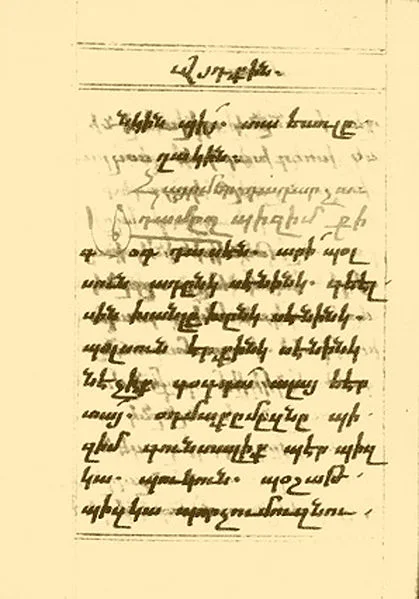
Armeno-Kipchak (texts in Armenian script). After the fall of the Armenian Bagratid state in the mid-eleventh century, a large part of the Armenians migrated northward to Crimea, where the Kipchaks lived, and formed a community there. The Armenians, whose numbers in the region reached around 35-40 thousand in the thirteenth and fourteenth centuries, began to use Kipchak Turkic in their churches and official correspondence because of their close contact with the Kipchaks and for political and commercial reasons.19 In terms of phonology and grammatical features it shows a great similarity to Karaim, Cuman, Urum and Crimean Tatar.20 Drawing on the observations of sixteenth- and seventeenth-century writers, the French missionary Gallifotskiy, the Italian cleric Antonia Maria Gratsini (1537-1611), the Polish historian Martin Kromer (1512-1589) and the German Yogan Alnpeh, it is recorded that the Christian communities north of the Black Sea, especially the Catholics, Greeks, Goths, Avars, Russians, Circassians, Kumyks and the local Armenians, spoke Kipchak; that along with their own languages they also knew Polish and Ukrainian, but used the Kipchak language in their worship; and that all the documents in Kamianets-Podilskyi and Lviv were written in Kipchak.21
Aleksandr Garkavets states that the Armenian-Kipchak relationship, which began in the geography of Armenia, continued in the Don, Crimea and Bessarabia, to which the Armenians migrated; that the Armenians learned the Kipchak language through neighbourly and commercial relations with the Kipchaks and made Kipchak a church language; and that, on the other hand, the Kipchaks' acceptance of Armenian Gregorian Christianity is documented by epigraphic data.22 The famous Turkologist Sir Gerard Clauson states that the Kipchaks accepted the Gregorian religion and, because of their religion, recorded their language in Armenian letters.
The linguistic material of Armeno-Kipchak consists of various files and papers belonging to the Armenian community of Kamianets-Podilskyi from the years 1559-1664. This material, which was kept in the city of Kyiv in Ukraine until 1943, was destroyed in the fires that broke out during the German retreat in 1944. Of these, only the texts transcribed by T. I. Hrunin in 1930 have survived. In addition, there are twenty-eight manuscripts written in Armeno-Kipchak in the libraries of Vienna, Venice, Paris, Breslau and Kraków. There are various publications on these manuscripts by researchers such as M. Lewicki, Omeljan Pritsak, E. Tryjarski, R. Kohnowa, Jean Deny, E. V. Sevortyan and R. Dashkevych.23
The sources clearly trace the development of Armeno-Kipchak: the Kipchak-Armenian contact, which began in the thirteenth century at the latest, developed further in the fourteenth century in Crimea through political and commercial relations. From the end of the fourteenth century and the beginning of the fifteenth, the Kipchak language was used as a spoken language by a large part of the Armenians in this geography. It played a role that greatly facilitated trade with the Ottoman state and the countries under its protection. Armeno-Kipchak, which survived as a spoken and religious language from the thirteenth century to the end of the fifteenth, reached, between the sixteenth and seventeenth centuries, a level at which it left important written documents in western Ukraine (Kamianets-Podilskyi and Lviv). But from the second half of the seventeenth century it began to lose its function and fell into oblivion.
Footnotes
- Efe Samet Karabacak, “Mısır- Memlûk Kıpçakçasının Oğuzcalaşması” https://www.academia.edu/11447448/M%C4%B1s%C4%B1r__Meml%C3%BCk_K%C4%B1p%C3%A7ak%C3%A7as%C4%B1n%C4%B1n_O%C4%9Fuzcala%C5%9Fmas%C4%B1 (Accessed: 13 Haziran 2019) ↩
- Cahit Baltacı, İslam Medeniyeti Tarihi, M.Ü. İlahiyat Fakültesi Vakfı, İstanbul 2005 ↩
- Necmettin Hacıeminoğlu, TDV, İslam Ansiklopedisi, “Kıpçak Türkçesi”, Ankara, 2002, c.25, p.422. ↩
- X. Uluslararası Dünya Dili Türkçe Sempozyumu Bildiri Kitabı, Raghed Mohammad, Memluk Kıpçak Türkçesi Sözlüklerindeki Türkçe Alıntı Kelimeler Üzerine Bir İnceleme, p.1126. ↩
- Necmettin Hacıeminoğlu, TDV, İslam Ansiklopedisi, “Kıpçak Türkçesi”, Ankara, 2002, c.25, p.422. ↩
- Necmettin Hacıeminoğlu, TDV, İslam Ansiklopedisi, “Kıpçak Türkçesi”, Ankara, 2002, c.25, p.423. ↩
- Fuat Bozkurt, Türklerin Dili, T.C Kültür Bakanlığı Yayınları, Kültür Eserleri Dizisi 260, p.276.- Necmettin Hacıeminoğlu, TDV, İslam Ansiklopedisi, “Kıpçak Türkçesi”, Ankara, 2002, c.25, p.423. ↩
- Necmettin Hacıeminoğlu, TDV, İslam Ansiklopedisi, “Kıpçak Türkçesi”, Ankara, 2002, c.25, p.423. ↩
- Necmettin Hacıeminoğlu, TDV, İslam Ansiklopedisi, “Kıpçak Türkçesi”, Ankara, 2002, c.25, p.423. ↩
- Necmettin Hacıeminoğlu, TDV, İslam Ansiklopedisi, “Kıpçak Türkçesi”, Ankara, 2002, c.25, p.423. ↩
- Auelbekova Şınar, “MÜNYETÜ'L GUZÂT'IN DİLİ HAKKINDA BİR DENEME”, Bilig Bilim ve Kültür Dergisi, S:5, (1997), p.181. ↩
- Auelbekova Şınar, “MÜNYETÜ'L GUZÂT'IN DİLİ HAKKINDA BİR DENEME”, Bilig Bilim ve Kültür Dergisi, S:5, (1997), p.181. ↩
- Can Özgür, “Kıpçak Türkçesi ile Yazılmış Kitabü’l Hayl’ın Yazmalarında Karışık Dil Özeliklerinin Görünümü” acarindex.com/dosyalar/makale/acarindex-1423933847.pdf (erişilemiyor) (Accessed: 13 Haziran 2019) ↩
- Şahamettin Kuzucular, “Şa’di Şirazi Hayatı Bostan Gülistan Ve Şiirimize Tesiri”, edebiyatvesanatakademisi.com (erişilemiyor) (Accessed:14 Haziran 2019) / Fuat Bozkurt, Türklerin Dili, T.C Kültür Bakanlığı Yayınları, Kültür Eserleri Dizisi 252, p.258 ↩
- Fuat Bozkurt, Türklerin Dili, T.C Kültür Bakanlığı Yayınları, Kültür Eserleri Dizisi 252, p.258 ↩
- Mustafa Özkan, TDV İslâm Ansiklopedisi, “SEYF-i SARÂYÎ Maddesi”, Ankara, 2009 C.37, S.29. ↩
- Mustafa Özkan, TDV İslâm Ansiklopedisi, “SEYF-i SARÂYÎ Maddesi”, Ankara, 2009 C.37, S.29. ↩
- Fuat Bozkurt, Türklerin Dili, T.C Kültür Bakanlığı Yayınları, Kültür Eserleri Dizisi 252, p.259 ↩
- Necmettin Hacıeminoğlu, TDV, İslam Ansiklopedisi, “Kıpçak Türkçesi”, Ankara, 2002, c.25, p.422./ Hülya Kasapoğlu Çengel “Ermeni Harfli Kıpçak Türkçesi”, Dil Araştırmaları, sayı.10 Bahar 2012, p.20 ↩
- Merve Karakaya (2010). Tarihî Kıpçak Metinlerinde Dini Terminoloji. TC. Gazi Üniversitesi Sosyal Bilimler Enstitüsü Türk Dili ve Edebiyatı Anabilim Dalı Türk Dili Bilim Dalı Master's Thesis, supervisor: Hülya Kasapoğlu Çengel, Ankara 2010 ↩
- Hülya Kasapoğlu Çengel “Ermeni Harfli Kıpçak Türkçesi”, Dil Araştırmaları, sayı.10 Bahar 2012, p.22 ↩
- Hülya Kasapoğlu Çengel “Ermeni Harfli Kıpçak Türkçesi”, Dil Araştırmaları, sayı.10 Bahar 2012, p.22 ↩
- Necmettin Hacıeminoğlu, TDV, İslam Ansiklopedisi, “Kıpçak Türkçesi”, Ankara, 2002, c.25, p.422. ↩
Mentioned in this publication
Cite this publication
Emir, E. (2019). Mamluk Kipchak and Armeno-Kipchak. The Kipchak Turks. Kıpçaklar. https://kipcaktarihi.com/en/yazi/mamluk-kipchak-and-armeno-kipchak
Emir, Emre. “Mamluk Kipchak and Armeno-Kipchak.” The Kipchak Turks içinde. Kıpçaklar, 2019. https://kipcaktarihi.com/en/yazi/mamluk-kipchak-and-armeno-kipchak.
Emir, Emre. “Mamluk Kipchak and Armeno-Kipchak.” Kıpçaklar, 2019, https://kipcaktarihi.com/en/yazi/mamluk-kipchak-and-armeno-kipchak.
Contribute to this publication
Have you spotted an error, or do you have information or a source to add? Send an update suggestion based on your own knowledge and sources. No account is needed; suggestions are reviewed by the author and the editorial board.
Want to edit the text directly? Log in with your account and edit in the panel or create a free account. Your changes are reviewed side by side; if accepted, your name will appear among the contributors.